
Key Takeaways
Reading the Iceland aurora forecast is less about finding one perfect number and more about comparing several conditions at once.
- The Kp index describes geomagnetic activity, not whether you can see the sky.
- Clear, dark skies are essential, even when aurora activity is strong.
- Iceland can see northern lights at relatively low Kp levels.
- Short-term solar wind and cloud forecasts are more useful for tonight’s plans.
- A guided small-group tour can help you respond to changing local conditions.
Understand what the Iceland aurora forecast actually predicts
The Iceland aurora forecast estimates the likelihood and strength of auroral activity over a given period. It does not promise that the lights will appear above your exact location. To understand how to read the Iceland aurora forecast, separate the space-weather prediction from the conditions on the ground. The most useful reading comes from combining both.
The difference between aurora activity and visibility
Aurora activity is what the Sun is doing. Visibility is what you can see standing in a field in the cold. They are not the same thing, and the gap between them is where most disappointed aurora hunters end up. A violent display behind thick cloud is nothing. A weak one under a clear, dark sky is a good night.
Start every forecast check here. The activity number is one input. Then you check cloud cover, darkness, light pollution, and where you are actually standing.
What the Kp index can and cannot tell you
The Kp index is a measure of geomagnetic disturbance. Higher values usually mean the auroral oval may expand farther from the polar regions and that activity may become more widespread. It is useful for judging potential, especially when comparing a quiet night with an unsettled one.
Kp does not tell you the exact minute the aurora will appear, how long it will last, or whether clouds will clear. It also does not describe the brightness of every display in a simple, direct way. Use it as a broad signal rather than a guarantee.
How solar wind speed, density, and polarity affect the display
The aurora is powered by conditions in the solar wind, the stream of charged particles reaching Earth from the Sun. Speed, density, and the direction of the magnetic field all change how much of that energy gets into the upper atmosphere. You do not need to read every number to use the forecast. But when activity suddenly picks up or dies, this is usually why.
A forecast that moves from quiet conditions toward stronger solar wind is worth watching more closely. Still, the signal needs to arrive during darkness and under a clear sky before it becomes a useful travel decision.
Why a high forecast does not guarantee northern lights
A high number can encourage people to go outside, but it cannot remove the practical limits of weather and daylight. Low cloud, haze, rain, snow, urban glow, or a bright moon may reduce what reaches the eye. Forecast timing can also shift as new space-weather data arrives.
This is why no guide worth booking reads one forecast panel and calls it settled. You compare updates through the evening, and then you look up, which is still the most reliable instrument anyone has. The forecast is a guide, not a promise, and that mindset makes the wait more enjoyable.
Update for the 2026 to 2027 season: where the solar cycle actually stands
You will read a lot of marketing this autumn claiming 2026 is the peak of the solar cycle. It is not, and it is worth knowing the real position before you plan a trip around it.
Solar Cycle 25 reached its maximum around late 2024, and the Sun has been in the early declining phase since. That sounds like bad news and mostly is not. The decline from a strong cycle takes roughly five to six years, and the first couple of years of it still produce excellent geomagnetic conditions. Some of the most severe geomagnetic storms on record arrived one to two years after solar maximum rather than at the peak itself, because of how the Sun reorganises its magnetic field on the way down.
The practical translation for the 2026 to 2027 winter: fewer sunspots and flares than 2024 gave us, but still more frequent and stronger displays than any season before 2023. Good conditions, not once-in-a-lifetime conditions. Anyone selling you the latter is reading a press release from two years ago.
None of this changes how you read a forecast on the night. Cloud cover still decides your evening far more often than the Sun does.
Read the Kp index for Iceland
Iceland sits in a favorable latitude for aurora viewing, so the country does not always need an extreme Kp value. The number matters, but its meaning depends on where the auroral oval is positioned and when the activity occurs. Look for a combination of suitable latitude, rising activity, darkness, and clear skies.
What Kp levels mean across Iceland
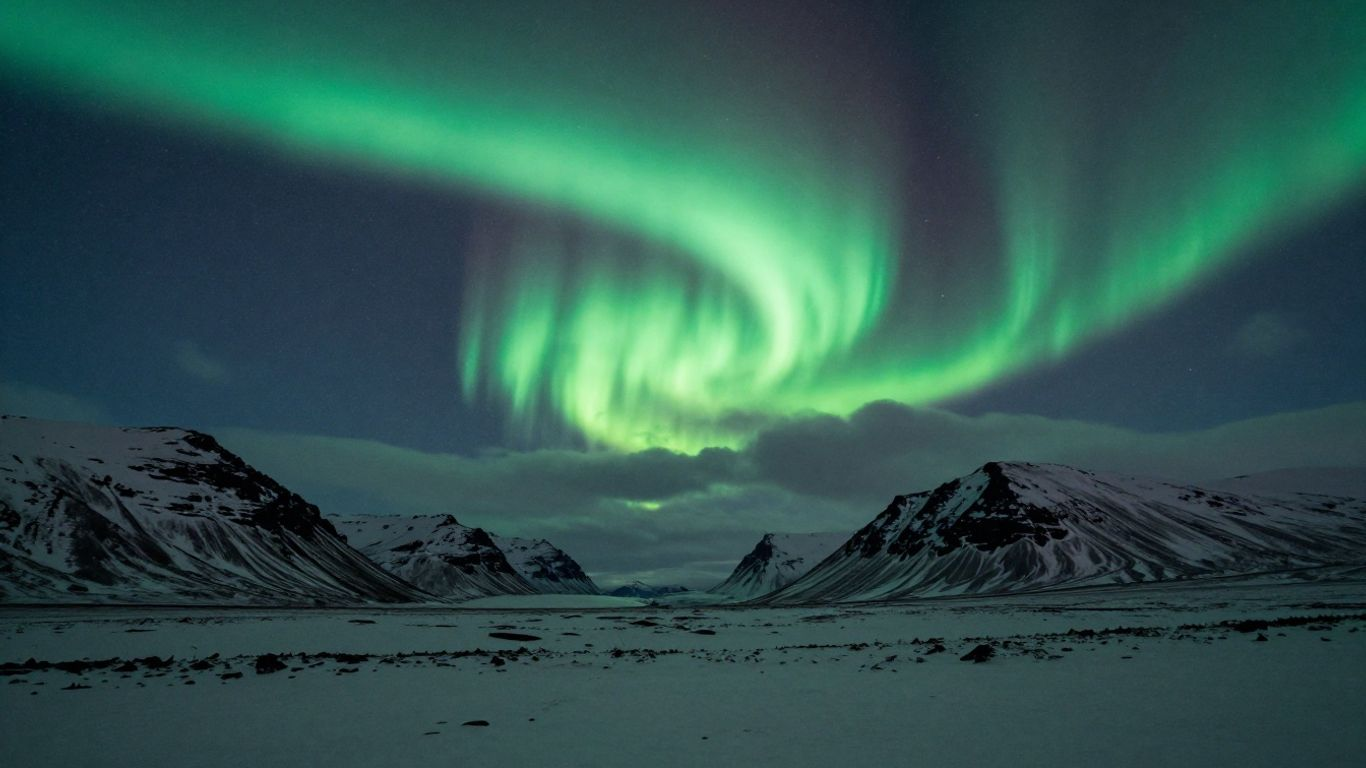
Lower Kp values can still coincide with visible auroras in Iceland because the island is close to the auroral zone. As Kp rises, the possible viewing area and intensity may increase, but the change is not a simple scale from invisible to visible.
Use Kp to set expectations. A low value may suggest a subtle arc or pale movement, while a higher value may support brighter and more active forms if the other conditions cooperate.
Why Iceland can see auroras with a low Kp
Iceland’s northerly position places it near the region where auroras commonly occur. When the oval is favorably placed, activity can be visible without a major geomagnetic storm. This is one reason a low Kp forecast should not automatically end your plans.
Local darkness also helps. Away from strong city lights, the eye can pick up faint structure and movement that would disappear in a bright urban setting.
How latitude, strength, and timing work together
Latitude affects where the auroral oval sits, strength affects how active the display may become, and timing determines whether anyone is awake and outside to see it. These factors overlap rather than working independently. A moderate forecast at the right hour may be more useful than a stronger forecast during daylight or heavy cloud.
When reading a map, check whether its prediction covers Iceland during the hours you can realistically be outdoors. The map is most useful when translated into a local plan.
When a rising Kp forecast is worth following
A rising forecast deserves attention when it is supported by improving solar wind data and a workable weather forecast. It is especially worth following if the change is expected during the darkest part of the night rather than near dawn.
Do not drive simply because the line has moved upward. First check cloud cover and road conditions, then decide whether a guided outing gives you a sensible way to respond to the update.
Check cloud cover before chasing the aurora
Cloud cover is often the deciding factor in Iceland. The lights may be active above a completely overcast sky, but the display will remain hidden from the ground. A practical forecast check therefore begins with the clouds, not the brightest color on an aurora map.
Why clear skies matter more than a strong Kp number
A clear sky gives the aurora a chance to reach your eyes, while a strong Kp value only describes favorable space weather. Even thin or broken cloud can make a display appear and disappear, which may be mistaken for changing auroral activity.
If the sky is fully covered, moving to a clearer area is usually more useful than waiting for the Kp number to rise. The best plan balances the forecast with the actual weather near the viewing area.
How to read Iceland’s cloud-cover maps
Cloud maps often divide the country into areas of cloud and clearer sky, but the boundaries can move quickly. Read the map as a broad pattern rather than a precise promise for one field or roadside viewpoint. Check several forecast times and compare them with radar or satellite imagery when available.
Look for a broadly clear region you can reach safely. Chasing one small gap in the cloud two hours away is how people spend the whole night driving and see nothing. The narrower the gap your plan depends on, the more likely the forecast is wrong about it.
Finding clear areas near Reykjavík
You can see the aurora from Reykjavík. City light just eats the faint end of it, so a display that would look striking from a dark road can register as a grey smudge from a car park downtown. The useful question on any given night is whether the nearest clear sky is worth driving to, which is a judgement call about that evening rather than a rule.
Scenic’s Northern Lights tours from Reykjavík are guided small-group experiences in which local guides use real-time forecasts and local knowledge to hunt for the aurora. The same page describes a free rebooking guarantee if the lights do not appear, which can matter when one cloudy night does not cooperate.
Using weather forecasts safely in changing conditions
Weather forecasts are helpful, but Icelandic conditions can change across short distances and over a single evening. Wind, precipitation, visibility, and road status all belong in the decision. A clear patch is not useful if reaching it requires an unsafe journey.
Before leaving Reykjavík, confirm the latest conditions and listen to local guidance. A patient guided plan is usually better than repeatedly changing direction as each forecast update arrives.
Match the forecast to darkness and location
Auroras need darkness to be seen, so the time of year and the hour of the night shape every forecast decision. Iceland’s changing daylight can make a strong prediction irrelevant at the wrong time. Location matters too, especially when artificial light or local cloud reduces contrast.
The best months for northern lights in Iceland
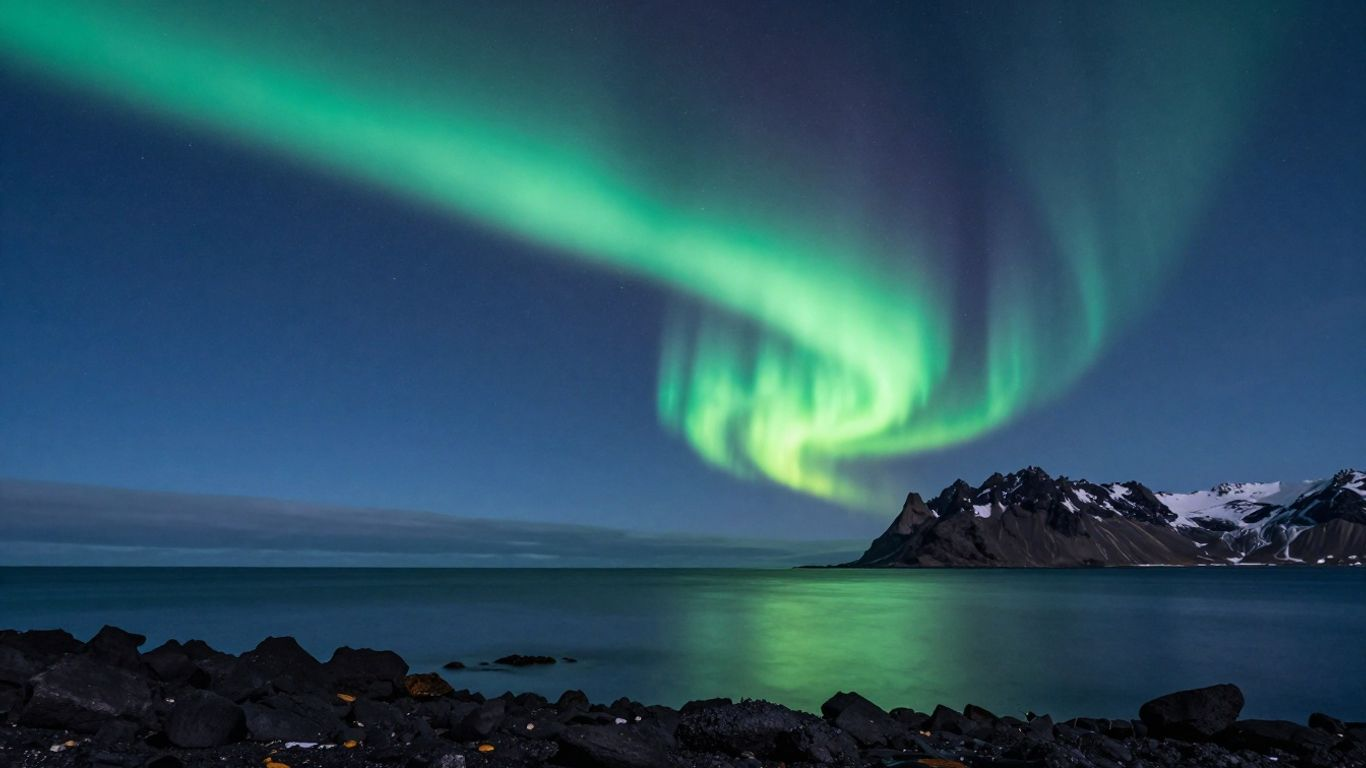
The northern lights season in Iceland runs from late August to mid April, which is simply when the nights get dark enough again. Scenic’s aurora tours run across that whole window. Midwinter gives you the most hours of darkness to work with. The shoulder weeks at either end often give you better weather, which matters more than people expect.
There is no perfect month. Pick a stretch with enough darkness for your schedule, then give yourself more than one night, because weather and activity rarely line up on command.
How sunset, twilight, and moonlight affect viewing
Sunset and twilight determine when the sky becomes dark enough for an aurora to stand out. Moonlight does not prevent viewing, but it can brighten the landscape and reduce the contrast of a faint display. It may also illuminate clouds, making them easier to notice.
Check the darkness window for the specific date rather than relying on a general seasonal rule. A forecast becomes more actionable once you know when you can actually see the sky.
Choosing darker locations away from city lights
Artificial light reduces contrast, particularly when the aurora is pale or low on the horizon. Moving away from the brightest urban areas can improve the view, although darkness should never be pursued at the expense of safety or access.
Scenic’s Northern Lights photo tour is designed for visitors who want a guided aurora experience from Reykjavík with expert guidance and photographic support. A local guide can also help choose a setting that fits the weather rather than chasing darkness without a clear plan.
Why local visibility can differ across the island
Iceland’s weather is often regional. One side of the island may be cloudy while another has open sky, and wind can alter the cloud pattern during an evening. The aurora itself may also be stronger in one direction from your viewpoint.
This is why a national forecast should be narrowed to the conditions around your intended outing. Local observation, updated weather information, and a guide’s knowledge of the area can add useful context.
Use short-term forecasts to time your outing
Longer-range forecasts are useful for choosing which night to keep available, but they become less precise as the date approaches. The final decision should come from short-term space-weather data and local sky conditions. Think of the forecast as a sequence of updates rather than a fixed appointment.
Interpreting the three-day aurora forecast
A three-day forecast can show whether a period looks broadly active or quiet. It is good for comparing evenings and deciding which nights deserve flexibility. It is not reliable enough to specify exactly when the display will begin from a particular viewpoint.
Use it to keep options open. Then reassess on the day, when cloud forecasts and solar wind observations are more useful.
Using the 30-minute solar wind forecast
A 30-minute forecast can help indicate what may reach Earth soon, making it useful once you are already considering an outing. It may show a short-term change in activity that a broad daily forecast cannot capture.
This window is still an estimate, not a countdown. Combine it with the sky above you and the latest cloud information before deciding to wait longer or move.
Watching for real-time aurora activity
Real-time reports can confirm that activity is happening, but they should be treated as observations from one place and one moment. A report elsewhere does not automatically mean the display is visible from Reykjavík. Look for consistency between reports, webcams, and your own view of the sky.
Give your eyes time to adjust outside. Faint green or gray structure may be difficult to distinguish at first, especially near light sources.
How long to wait once conditions look favorable
There is no dependable waiting time that guarantees a display. Activity can strengthen quickly, fade, or remain quiet for a long period. If the cloud forecast is good and the sky is dark, a patient wait may be worthwhile.
A guided tour helps make that waiting period more comfortable and organized. If conditions are poor across the region, it is also reasonable to stop rather than spend the whole night pursuing a forecast that is not improving.
Combine reliable forecast tools and local observations
No single tool captures the whole situation. Space-weather services describe solar activity, weather services describe the sky, and local reports show what people are seeing at that moment. The strongest plan comes from comparing these sources without expecting them to agree perfectly.
Comparing the Icelandic Met Office and international forecasts
The Icelandic Met Office is useful for local weather, cloud, wind, and precipitation information. International space-weather services provide broader aurora and solar-wind context. They answer different questions, so a disagreement is not necessarily an error.
Use the local forecast to judge whether the sky and travel conditions are workable. Use the aurora forecast to judge whether there is a reason to go outside in the first place.
Using aurora apps and notification alerts
Aurora apps can make activity updates easier to follow, especially when you are already traveling. Alerts may remind you to check the sky, but they can also encourage unnecessary excitement when clouds or daylight make viewing impossible.
Treat an alert as a nudge to go look, not a summons. Check it against cloud cover, darkness, and what the weather is doing where you plan to stand.
Reading webcams and live sky reports
Webcams can provide a useful visual check, particularly when they are located near the region you are considering. Their limitations are equally clear: a camera may face the wrong direction, show a different cloud layer, or capture colors more strongly than the human eye.
Live reports are most helpful when they include a location and time. Treat them as supporting evidence, then compare them with the weather and your own view.
Confirming a forecast with satellite and cloud imagery
Satellite and cloud imagery can show whether a predicted clear patch is developing or closing. Look for movement over several updates instead of relying on one image. This helps distinguish a stable opening from a brief gap that may disappear before you arrive.
A local guide can make this comparison while also considering safe access and the experience of the group. Scenic Iceland’s local guided tour approach combines small-group excursions with professional, knowledgeable guides and local service, which fits the practical nature of an aurora outing.
Turn the forecast into a practical viewing plan
Once you understand the numbers, turn them into a simple decision. Set a reasonable threshold for activity, clear skies, and darkness, then decide how much travel is sensible. A good plan leaves room for changing conditions rather than treating the forecast as a fixed route.
Setting a minimum threshold for activity, skies, and darkness
Start with three questions: Is there enough activity to make going worthwhile? Is there a clear enough sky in the likely viewing area? Will it be properly dark during the available hours? If the answer to all three is yes, the forecast has become practical rather than theoretical.
You do not need the highest possible Kp value. A moderate forecast with clear, dark conditions can offer a better evening than a strong forecast hidden by cloud.
To keep the decision clear, check these points in order:
- Confirm darkness for the date and expected viewing hours.
- Check cloud, wind, precipitation, and visibility near the destination.
- Compare current aurora activity with the three-day outlook.
- Decide whether a local guided outing is safer and more useful than waiting in Reykjavík.
This sequence prevents one exciting number from dominating the whole decision. It also makes it easier to explain why you are going out, waiting, or trying another night.
Deciding whether to stay in Reykjavík or drive
Staying in Reykjavík may be sensible when the skies are clear nearby and activity is promising. A move farther from city light can help when the display is faint, but distance alone does not solve cloud or road problems. The decision should be based on the clearest safe option, not the farthest possible location.
For visitors who prefer a guided experience, Scenic’s Northern Lights Photo Tour offers a focused way to view and photograph the aurora from Reykjavík with expert guidance. The relevant choice is not simply city versus countryside. It is whether the evening’s conditions support a comfortable, well-managed outing.
Planning around road conditions and winter safety
Winter travel in Iceland requires attention to wind, ice, snow, visibility, and official road information. These conditions can change after the forecast was published. Never let a promising aurora map override a safety warning.
A guided outing keeps the night from turning into a navigation problem in the dark on unfamiliar roads. Dress in warm layers, cover exposed skin, and do what the guide says when the vehicle stops. Standing still in an Icelandic wind for an hour is colder than the thermometer suggests.
Knowing when to stop waiting and try another night
A forecast can stay ambiguous for hours. If the cloud is everywhere, the activity is fading, and the roads are getting worse, going home is the right call rather than a defeat. The lights do not take bookings. Nights spent stubbornly waiting out bad conditions are how people end up remembering the cold instead of the sky.
Keep another evening available when your itinerary allows. Scenic’s northern lights experiences include free rebooking until you see the lights, as described on its tour information, so one unsuccessful night does not have to be the end of the attempt.
Conclusion
Reading the Iceland aurora forecast well means holding several things at once: Kp and solar wind on one side, cloud cover, darkness, and safe roads on the other. Use the three-day view to choose which nights to keep free. Use the short-term data to pick the hour. Use local knowledge for the final call. Then go outside, let your eyes adjust, and give the night an hour before deciding it is a write-off.
Frequently Asked Questions
What does the Iceland aurora forecast predict?
It predicts likely auroral activity and its broad strength over a period. It does not guarantee visibility from a particular place because cloud, darkness, light pollution, and timing still matter.
What Kp level is needed to see the northern lights in Iceland?
There is no fixed minimum that works every night. Iceland can sometimes see auroras at low Kp levels because of its latitude, especially when skies are clear and the auroral oval is favorably positioned.
Is cloud cover more important than the Kp index?
For visibility from the ground, clear skies are essential. A high Kp forecast behind thick cloud is less useful than modest activity under a clear, dark sky.
What months are best for northern lights in Iceland?
Late August to mid April, which is when there is enough darkness. The best month inside that window depends on your schedule, the cloud, and how many dark hours you get during your stay.
How accurate is a three-day aurora forecast?
It is useful for comparing broad trends and choosing which nights to keep available. It becomes more useful when combined with same-day cloud information and short-term solar-wind updates.
Should I use an aurora app?
An app can provide convenient activity updates and alerts, but it should not be used alone. Always compare its information with local weather, darkness, and the actual sky.
How long should I wait for the northern lights?
There is no guaranteed waiting period. If skies are clear and activity looks promising, patience may help, but it is also reasonable to stop when cloud, weather, or the forecast is clearly working against you.