
Key Takeaways
An ice cave tour can feel cold, damp, and windy, especially before you reach the entrance. The right clothing keeps you comfortable so you can concentrate on the changing blue ice and the guidance of your tour leader.
- Wear wool or synthetic base layers instead of cotton.
- Build warmth with flexible midlayers and insulation.
- Use waterproof outerwear and sturdy, grippy boots.
- Protect your head, hands, neck, and feet from heat loss.
- Check the operator’s equipment list and pack simple backups.
Start with a moisture-managing base layer
The first layer sits against your skin, so it affects comfort more than its thin appearance suggests. A good base layer moves perspiration away from your body while helping retain warmth. For anyone wondering what to wear for an ice cave tour, this is the place to start. Choose a close but comfortable fit that allows room to move.
Choose wool or synthetic fabrics
Merino wool and synthetic fabrics are practical choices for a base layer because they continue to insulate better than cotton when conditions become damp. Pick a long-sleeved top and full-length bottoms, particularly if the tour includes time outdoors on a glacier or in exposed weather. The fabric should feel comfortable under the rest of your clothing, without bunching at the elbows, knees, or waist.
Avoid cotton in cold, wet conditions
Cotton absorbs moisture and dries slowly, which can leave you feeling chilled once you stop walking. That problem is easy to underestimate during the approach to an ice cave, when a little exertion may make you warm before the temperature drops again. Leave cotton jeans, cotton sweatshirts, and ordinary cotton socks out of the main outfit.
Dress for activity levels inside the cave
An ice cave visit often involves walking, standing, and waiting while the guide explains the surroundings. You may feel warm on the approach and cooler inside the cave, so avoid a base layer that is either too heavy or restrictive. A lighter first layer gives you more control when the rest of your clothing needs adjusting.
Build warmth with flexible insulating layers
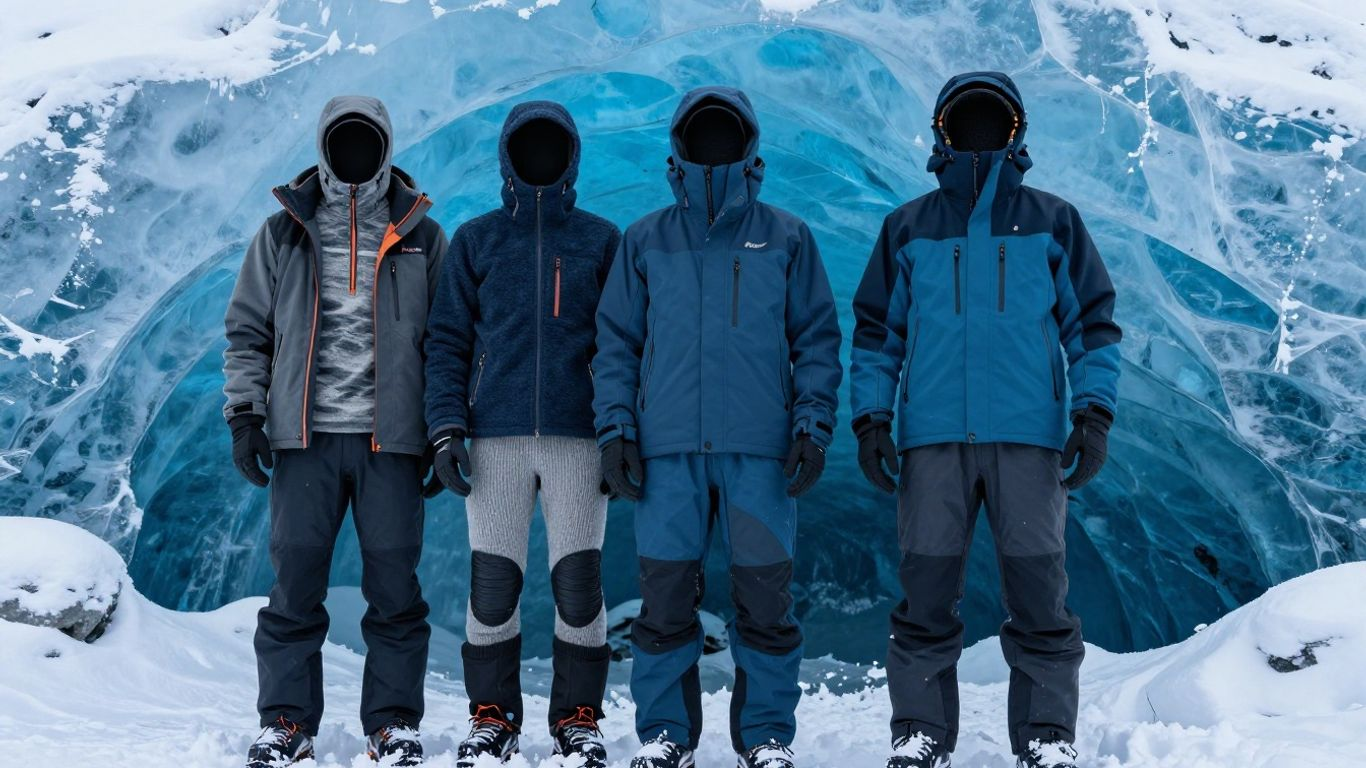
Your insulating layers trap warm air between the base layer and the shell. Rather than relying on one very thick garment, combine pieces that can be added or removed as the weather changes. Flexible insulation matters most when the day includes transport, walking outside, and time inside the cave.
Use a fleece or wool midlayer
A fleece or wool sweater makes a reliable middle layer because it adds warmth without making movement awkward. Choose a garment with enough space for your base layer underneath and your shell above it. A full-zip style is especially convenient because you can open it during a more active stretch and close it again when you pause.
Add a packable insulated jacket
A lightweight insulated jacket is useful when the wind picks up or you are standing still. Down can provide substantial warmth for its weight, while synthetic insulation is often a sensible choice in damp conditions. Keep the jacket accessible in your day bag rather than buried under spare clothing.
Adjust layers for changing weather
Icelandic weather can shift between wind, rain, snow, and calmer intervals during the same outing. Start slightly cool rather than overheated, then add a layer when you stop or when the temperature falls. Scenic Iceland’s packing list for tours is a useful reference for planning a complete clothing system rather than packing one oversized coat.
Protect yourself with a waterproof outer shell
The shell is your barrier against rain, wet snow, wind, and moisture from the cave environment. It should fit over your layers without pulling across the shoulders or restricting your stride. A shell also gives you room to fine-tune warmth underneath as the day develops.
Choose a waterproof and breathable jacket
Look for a genuinely waterproof jacket with a hood and enough room for your insulation. Breathability helps release heat during the walk to the cave, while sealed seams and a protective front closure limit water getting through. A jacket that is merely water resistant may not be sufficient if rain or snow continues for part of the outing.
Wear waterproof trousers over your base layers
Waterproof trousers protect your legs from rain, wet snow, and contact with damp ground or ice. Choose a pair that fits over your base layer and midlayer without catching at the knees. Full-length side zippers or generous openings can make them easier to put on without removing your boots.
Check cuffs, hoods, and closures for snow protection
Small openings can make a large difference when wind pushes snow or rain toward your skin. Before leaving, test the jacket cuffs over your gloves, adjust the hood while wearing your hat, and close every zip or fastener. A longer back panel can also add comfort when you bend or sit during transport.
Wear sturdy footwear with proper traction
Footwear needs to keep your feet warm, dry, and stable on uneven ground. Ordinary trainers are a poor choice for a guided ice cave outing because they offer limited protection from water and little grip on slippery surfaces. If you are joining Scenic Iceland’s Ice Cave tour, confirm the current equipment requirements before the day of departure.
Select warm, waterproof hiking boots
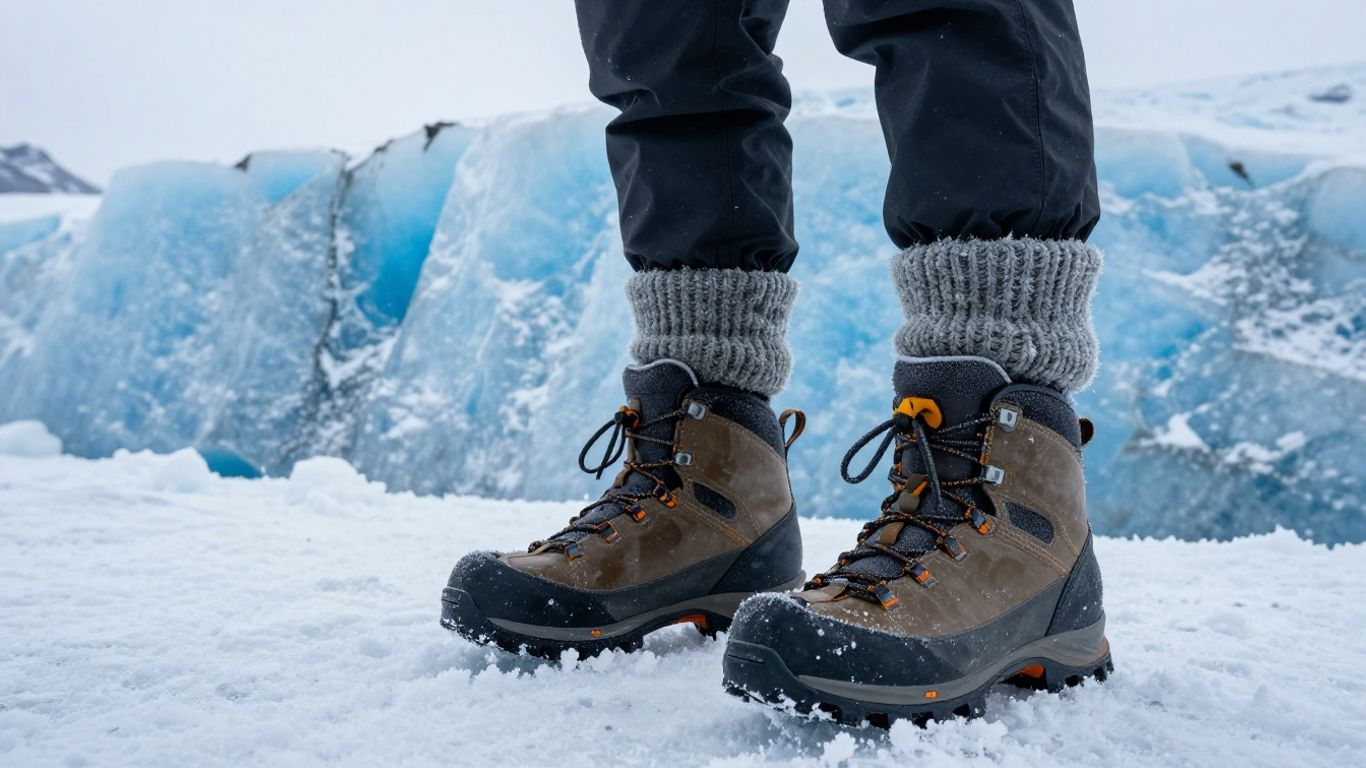
Choose sturdy hiking boots with a waterproof construction, supportive ankle area, and a sole designed for uneven outdoor terrain. Break them in before the tour so that seams and stiff areas do not create pain. Your boots should feel secure when walking uphill, but they should not pinch your toes or restrict circulation.
Make room for thick wool socks
Wear wool socks that fit comfortably inside your boots, leaving enough room for your toes to move. Two overly thick pairs can compress the foot and make it colder, so test the complete combination before travelling. Pack a dry spare pair in a waterproof bag in case your original socks become wet.
Understand how crampons or traction aids fit
Some glacier and ice cave tours use traction equipment supplied and fitted by the operator. Your boots still need to be sturdy and compatible with the equipment, so read the operator’s instructions rather than assuming every shoe will work. Scenic Iceland’s glacier safety guide explains why guided glacier travel and the right equipment matter in changing ice conditions.
Cover the parts of your body that lose heat
Warm clothing is not only about the torso and legs. Wind can quickly cool exposed ears, fingers, and the back of the neck, even when the rest of your outfit feels comfortable. Accessories should be easy to reach and simple enough to adjust while wearing other equipment.
Pack a warm hat that fits under a helmet
A close-fitting wool or synthetic hat keeps your ears covered without creating pressure beneath a helmet. Avoid very bulky styles that interfere with a secure fit. Bring the hat with you even if the approach feels mild, since wind and stillness can make the cave entrance noticeably colder.
Choose gloves that balance warmth and grip
Gloves should keep your fingers warm while allowing you to hold a walking pole, camera, or other equipment securely. A thin liner under a warmer outer glove gives you options if your hands heat up while walking. Avoid loose cuffs that make it difficult to pull your jacket sleeves over them.
Use a neck gaiter or buff for extra protection
A neck gaiter blocks drafts around the collar and can be pulled over your cheeks when wind rises. It is less cumbersome than a long scarf, which may catch on equipment or need constant adjustment. Choose a breathable fabric that dries reasonably quickly if it becomes damp from your breath.
Adapt your clothing to the season and location
The same basic layering system can work across Iceland, but the outer conditions still shape what you need. An approach near a glacier may be exposed to wind, while the cave itself can feel sheltered and still. Check the exact tour information before packing, and follow the guide’s advice on the day.
Prepare for wind and rain outside the cave
The journey to an ice cave may involve open landscapes where wind makes the air feel colder than the forecast suggests. Waterproof outerwear, a secure hood, and gloves that remain useful when damp are therefore part of the core outfit. Keep your shell on hand during transport instead of leaving it at the bottom of a bag.
Plan for colder conditions on glacier tours
Glacier outings call for a little more care with insulation, footwear, and hand protection because the surface is exposed and conditions can change quickly. Scenic Iceland’s Vatnajökull Glacier Hike uses similar principles for insulation and footwear, and its equipment guidance is worth comparing if you are planning that trip too. Note that the two tours run in opposite seasons: the ice cave tour operates October to April, while the glacier hike runs May to September, so they cannot be booked on the same visit.
Check the operator’s equipment and clothing requirements
Do not guess about helmets, crampons, harnesses, or other technical equipment. The operator can tell you what is supplied, what must fit over your clothing, and whether particular boots are required. Scenic Iceland’s ice cave tour runs from October to April, so confirm the current seasonal information and clothing requirements when booking.
Pack practical extras for a safer tour
A few small additions can make the day easier without turning your bag into a heavy load. Think about what might get wet, what you may need to change, and what should remain accessible during the tour. Scenic Iceland runs guided small-group tours, so follow the guide’s instructions about what can be carried into the vehicle and onto the route.
Bring spare socks and lightweight backup layers
A spare pair of socks is one of the most useful additions for a wet-weather outing. You can also pack a thin backup fleece, glove liners, or a lightweight hat if your clothing becomes damp. Use sealed bags to separate dry items from anything that has already been worn.
Protect your phone and camera from moisture
Cold and wet conditions call for a simple protection plan for electronics. Store your phone and camera in a waterproof pouch when you are not using them, and keep a soft cloth available for condensation or spray. Batteries may lose charge faster in the cold, so carry a spare where practical and keep it protected from moisture.
Leave bulky bags and unsuitable clothing behind
Large bags can get in the way when you are walking on uneven terrain or wearing supplied safety equipment. Pack only what you can carry comfortably and leave umbrellas, smooth-soled shoes, and loose accessories behind. A compact waterproof day bag is usually easier to manage than an overloaded backpack.
Before you leave, check your clothing in the order you will wear it. These four simple checks catch most problems before they become uncomfortable:
- Confirm that your base layer is dry and not cotton.
- Test the shell over every insulating layer.
- Walk in your boots with the socks you plan to wear.
- Put your hat, gloves, and neck gaiter somewhere easy to reach.
That short check is more useful than adding another random garment. It also gives you time to adjust fit before the guided outing begins.
Conclusion
The best answer to what to wear for an ice cave tour is a breathable base layer, adaptable insulation, waterproof outerwear, secure boots, and warm accessories. Pack for the exposed approach as well as the cave, follow the operator’s equipment guidance, and let your guide handle the route and changing ice conditions.
Frequently Asked Questions
What should I wear as a base layer for an ice cave tour?
Wear a long-sleeved wool or synthetic top with matching long underwear. These fabrics manage moisture better than cotton and remain more comfortable when the activity level changes.
Are jeans suitable for an ice cave tour?
Jeans are generally a poor choice because they absorb moisture and dry slowly. Wear thermal or synthetic trousers underneath waterproof trousers instead.
Do I need waterproof trousers?
Yes, waterproof trousers help protect you from rain, snow, damp ground, and wet contact around the cave. Choose a pair that fits comfortably over your other layers.
What kind of boots are best?
Wear warm, waterproof hiking boots with ankle support and a grippy sole. Make sure they fit well with your chosen wool socks and are suitable for any traction equipment required by the operator.
Should I bring extra clothes?
Bring spare socks and one lightweight backup layer in a waterproof bag. These items are useful if your clothing becomes damp during the approach or in changing weather.
How warm should my jacket be?
Use a flexible system rather than relying on one heavy coat. A fleece or wool midlayer plus a packable insulated jacket under a waterproof shell lets you adjust warmth as conditions change.
Do I need special glacier equipment?
Some tours provide technical equipment such as helmets or traction aids, while personal clothing and boots may still be your responsibility. Check the operator’s current requirements before departure and follow the guide’s fitting instructions.